
Filer vs Non-Filer in Pakistan (2026 Guide)
Every year, Pakistan’s tax system in Pakistan becomes stricter as the government upgrades digital tax monitoring tools and reshapes government tax policies. In 2026, the pressure to become a filer has grown because banks, property dealers, and telecom companies are required to check your financial documentation before offering services. If you stay a non-filer, you face higher taxes, blocked services, extra scrutiny, and serious tax penalties. In this guide, we discuss filer vs non-filer in Pakistan
Pakistan now links most financial activities to the FBR (Federal Board of Revenue) databases. That means every bank transaction, property transaction, or vehicle registration influences your financial credibility and can even trigger tax notices if something looks unusual. This strong move toward financial transparency aims to reduce tax evasion, increase national revenue, and promote responsible citizenship.
What is a Filer?
A filer is any person or business listed in the Active Taxpayers List (ATL) issued weekly by the FBR (Federal Board of Revenue). A filer has a valid National Tax Number (NTN), submits an annual income tax return, and provides proper tax documentation that shows their income, expenses, and taxable income. This process builds a clear financial profile and reduces your tax burden.
Being a filer shows you follow Pakistan tax regulations and maintain proper economic documentation in Pakistan, which helps you qualify for tax advantages for filers. It also strengthens your credit score in Pakistan, reduces withholding tax, and unlocks smoother access to bank loans, credit cards, and international visa approvals because your financial behavior monitoring becomes transparent.
What is a Non-Filer?
A non-filer is someone who does not appear in the Active Taxpayers List (ATL), usually because they did not submit their yearly income tax return on the IRIS portal. Non-filers face heavy consequences for non-filers including higher taxes, blocked SIM cards, and restrictions on property transactions or high-value transactions.
In 2025, non-filers pay double to triple withholding tax, face strict bank scrutiny, and risk account freezing when performing large bank transactions. The government tax policies now even allow SIM card blocking and heavy tax penalties for prolonged non-compliance. This category suffers from weaker financial credibility, making it harder to access loan approval requirements, investments, or corporate opportunities.
Why It’s Important to Be a Filer in 2026
The year 2025 has introduced sharper tax laws 2025 Pakistan, reshaping how citizens interact with banks, real estate, and vehicles. Almost every financial service now checks your filer status. If you stay a non-filer, the tax burden increases because banks charge higher banking tax rates, real estate dealers impose extra duties, and vehicle offices apply double motor vehicle tax penalties.
Being a filer protects you from unnecessary tax penalties, avoids unwanted tax audit issues, and keeps your financial documentation updated. It also makes life easier because your financial behavior monitoring remains clean, meaning fewer risks of tax notices, blocked services, or sudden account freezing risk.
Benefits of Being a Tax Filer in Pakistan (2026)
Becoming a filer brings powerful financial benefits that most people underestimate. You pay lower withholding tax, enjoy easier approval for bank loans, and face fewer hurdles when handling bank transactions, foreign travel, or international transactions.
A filer gains access to tax relief programs, lower cash withdrawal tax, and smoother real estate documentation.
Filers also benefit from lower taxes on investments such as stock market tax, mutual fund tax, dividend tax rates, and CGT (Capital Gains Tax).
For property owners, being a filer reduces property tax, vehicle transfer tax, and token tax. You also build strong financial credibility, which positively affects your eligibility for mortgages, education loans, and business credit.
Consequences & Penalties for Non-Filers
In 2025, the consequences for non-filers have become severe. Non-filers pay higher banking charges for non-filers, heavy duties on property transactions, extra taxes on car tax in Pakistan, and strict scrutiny on high-value transactions. Telecom companies can trigger SIM card blocking, and real estate offices may refuse non filer restrictions on property.
Non-filers also face harsher tax audit triggers and immediate tax notices for unverified income. Banks flag them as risk profile borrowers, leading to higher interest rate risks or rejection of bank loans. FBR may freeze accounts or question asset declaration if statements do not match lifestyle or spending patterns.
Detailed Comparison: Filers vs Non-Filers in Pakistan
The difference between a filer and a non-filer affects every part of your financial life—from banking to real estate, vehicles, investments, and even business approvals. The table below shows the major differences clearly:
Table: Filer vs Non-Filer Taxes in Pakistan (2026)
| Area | Filer | Non-Filer |
| Bank Withdrawals | Low withholding tax | Very High tax |
| Property Deals | Lower duties | Double taxes |
| Vehicles | Low motor vehicle tax penalties | Higher registration & token tax |
| Investments | Reduced CGT | Higher CGT |
| SIM Cards | Always active | SIM card blocking risks |
| Business Deals | Easy verification | Higher scrutiny |
Filers save money, enjoy smoother services, and maintain strong financial credibility, while non-filers spend more and face constant restrictions due to Pakistan’s growing digital tax monitoring system.
Common Myths About Tax Filing in Pakistan
Many people believe they don’t need to file taxes because their income is below the income threshold (PKR 600,000), but this is one of the biggest common tax myths in Pakistan. You must file if you own property, a vehicle, make foreign travel, or receive foreign remittance—even if your income is low.
Another myth is that the income tax return process is complicated. Today, FBR offers tax preparation software, income tax guide, and verified tax consultancy service providers who help individuals file returns in minutes. Filing tax is simple, fast, and mandatory for building your financial profile.
How to Become a Tax Filer in Pakistan (Step-by-Step Guide)
Becoming a filer is now fully online, thanks to the IRIS portal and modern FBR online verification tools. You only need basic financial documentation like CNIC, phone number, email, and bank details.
Steps to File Tax Return
- Get your National Tax Number (NTN)
- Register on the IRIS portal
- Enter assets, income, expenses
- Submit your income tax return
- Apply for a tax refund if eligible
- Check the ATL status after 24–48 hours
You may also use a tax filing service, a salary tax calculator, a business tax calculator, a builder tax calculator, or a withholding tax calculator for accuracy.
Can You Become a Filer if You Never Filed Taxes Before?
Yes, absolutely. Even if you never filed taxes, you can become a filer by registering for an NTN and submitting a simple income tax return. Students, salaried individuals, freelancers, business owners, property owners, vehicle owners, and investors can all join the Active Taxpayers List (ATL) easily.
The process is friendly for beginners and supported by tax consultancy service providers. Many Pakistanis join the ATL every year to avoid tax penalties, build financial credibility, and access better banking opportunities.
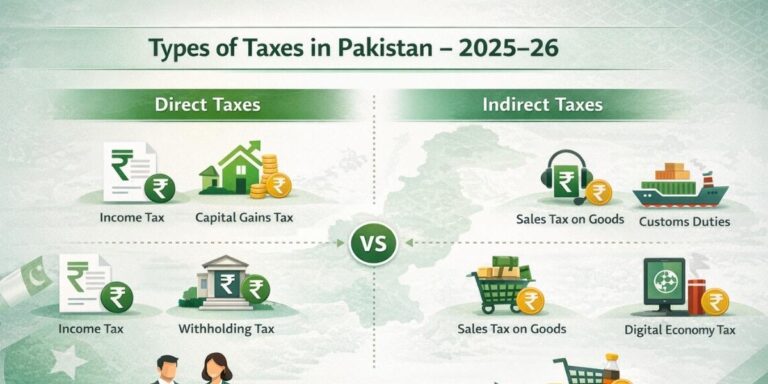
Types of Taxes in Pakistan (For Individuals & Businesses)
Pakistan collects multiple taxes to maintain public services. Key types include:
- Income Tax
- Property Tax Pakistan
- withholding tax
- vehicle transfer tax
- stock market tax
- mutual fund tax
- CGT (Capital Gains Tax)
- real estate investment tax
Each tax creates a record that strengthens your economic documentation in Pakistan and supports national development through national tax responsibility.
Understanding Deferred Tax in Pakistan
Deferred tax appears when your accounting income does not match your taxable income. Businesses handle it when using different depreciation or expense methods. Deferred tax can be a deferred tax asset or a deferred tax liability, impacting future profits.
Companies use bookkeeping software or rely on a Chartered Accountant such as Zafar Iqbal, Assurance Manager, or graduates from Rise School of Accountancy to correctly record and calculate deferred tax.
Solar Panel Tax Rules in Pakistan (2026)
In 2026, Pakistan will encourage solar adoption with reduced duties. However, some components face mild taxes depending on the import type. Filers enjoy smoother approvals and may qualify for tax relief programs, while non-filers face higher duties and stricter verifications.
Solar systems under net metering also need proper registration, and missing economic documentation in Pakistan can cause approval delays.
Final Advice:
Your filer vs non-filer status decides whether you enjoy financial freedom or face financial penalties throughout the year. Becoming a filer protects your future, reduces your taxes, builds a strong financial profile, and strengthens your financial credibility for life.
If you want a smooth banking, property, investment, or travel experience—start today. Filing taxes is simple, affordable, and essential for responsible citizenship in Pakistan.